
Blue Abadi Fund – Amidst the global threats of coral bleaching and marine ecosystem degradation, hope is taking root in the waters of the Bird's Head Seascape (BHS). Yet, this hope is not born of wishful thinking; it stems from hard work, precise data, and genuine community engagement.
The latest report from the Yaf Keru Team (Yayasan Orang Laut Papua/YOLP), working alongside local communities in the Dampier Strait and Misool, offers a crucial lesson: coral reef restoration is not merely a ceremonial planting activity, but a long-term commitment to maintenance and monitoring.
Numbers That Speak, Not Hyperbole
Conservation success is often measured solely by how many seedlings are deployed into the sea. However, data from the Dampier Strait Marine Protected Area (MPA) offers a deeper perspective. Together with five residents of Yembekwan Village, the Yaf Keru Team has planted 8,559 coral fragments covering an area of 2,435 m². 8.559 fragmen karang yang mencakup area seluas 2.435 m².
Yang menarik bukan hanya jumlahnya, melainkan keberagamannya. Sebanyak 30 spesies dari 13 famili (seperti Acropora, Montipora, hingga PocilloporaWhat is compelling is not just the quantity, but the diversity. A total of 30 species from 13 families (such as Acropora, Montipora, and Pocillopora) were planted. This demonstrates an effort to mimic natural complexity, rather than creating a monoculture coral garden. (Photo 1).

Photo 1. Installation Process of Wire Mesh Structures by the Yaf Keru Team.
The results? Biological indicators do not lie. Small fish are returning to the restoration area. Stable water temperatures of 29-30°C have supported coral growth, which was recorded at 1-2 cm during the April–June 2025 period. This is a vital sign that the ecosystem is beginning to recover.
The Key to Success: Maintenance Discipline
Many restoration projects fail due to a "plant and abandon" approach. The work in Kalig Island and Talaga Island (Misool) breaks this negative trend. An impressive survival rate of 85% (of the 3,668 fragments monitored on Kalig Island) is the fruit of disciplined maintenance. (Photo 2)survival rate) yang mencapai angka impresif 85% (dari 3.668 fragmen yang dipantau di Pulau Kalig) adalah buah dari disiplin perawatan. (Foto 2)
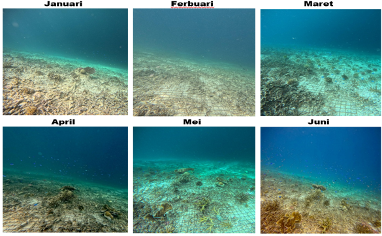
Photo 2. Timelapse Comparison of Monitoring Results for the First Quarter (January–March 2025) & Second Quarter (April–June 2025) at Point 5, Rascal Garden Site.
In May 2025, the team manually cleaned parasites such as algae, cyanobacteria, and ascidians attached to the artificial substrates. Without this human intervention, young coral fragments would certainly be outcompeted and die. Our stance is clear: Restoration without maintenance is futility. The success of 3,130 colonies now growing healthily is proof that routine intervention is an absolute prerequisite for conservation success.
Technology and Data Transparency
Another aspect worth appreciating is the methodology employed. YOLP leaves nothing to guesswork. The use of the "sampling point" method with iron stakes at observation points, along with documentation via the "Survey 123" app and timelapse photos, makes this data accountable.
Transparency regarding coral conditions—whether healthy, diseased, or dead—is monitored in real-time. This allows for objective evaluation of methods, rather than one-sided claims of success. (Photo 3).
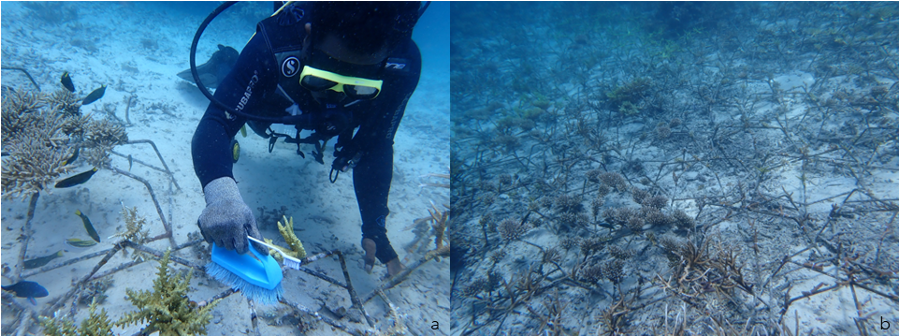
Photo 3. Cleaning Artificial Reefs of Parasites.
Good Intentions for Ocean Recovery
Restoration efforts in the Dampier Strait and Misool teach us that healing the ocean requires more than just good intentions. It requires the hands of local residents (such as those from Yembekwan and Yellu Villages) willing to dive in, clean parasites, and record data.
The 85% survival rate at Kalig Island validates that the methods used are on the right track. This is a restoration model that must be replicated: data-driven, community-managed, and maintained with diligence.
